
Have you ever tossed and turned late at night, weary of the monotony of your nine-to-five job, yet simultaneously feeling fear and uncertainty about the idea of "being your own boss"? You may have passed by the Starbucks or McDonald's on the corner countless times, a thought flashing through your mind: "What if I could open a place like this?"
That very thought is where thousands of successful entrepreneurs began. Welcome here. I'm Qaolase, the site administrator. I'm not some certified financial analyst with countless credentials. Like you, I'm an explorer driven by curiosity and passion for the business world. Over the past few years, I've immersed myself in the fascinating yet complex world of franchising, engaging in deep conversations with hundreds of entrepreneurs, franchisees, and even brand owners. I've stumbled into pitfalls myself and witnessed others fall into them, but more often, I've seen ordinary people realize their entrepreneurial dreams through a proven system.
This isn't a dry textbook. I'll take you on a journey, using the most authentic, conversational approach to fully unravel "what franchising is really all about."
After reading this article, you'll have clear answers to these questions:
What exactly are the "rules of the game" in franchising?
Is franchising really suitable for someone with my personality and background?
How much does it really cost to open a franchise? Where are the hidden expenses?
What steps are required to build your own franchise from scratch?
How can you decipher the secrets behind complex legal documents (FDD) like an expert?
Compared to starting a business from zero, what are the real advantages and critical drawbacks of franchising?
Most importantly, I won't just give you information-I'll equip you with a decision-making toolkit. Whenever you encounter a challenge, I'll show you how to use our website's exclusive free tools to transform fuzzy ideas into clear data.
Ready? Let's lift the veil on franchising together.
Disclaimer & Investment Warning:
This content is for informational and educational purposes only and does not constitute financial or legal advice. Investing in franchises involves significant risks, including the potential loss of your entire investment. Before making any commitments, we strongly advise consulting qualified franchise attorneys and financial advisors, and thoroughly reviewing any franchise opportunity and its Franchise Disclosure Document (FDD). Tools provided on this site are for estimation and self-assessment only and do not guarantee success or profitability.
1: The Core Concept: The Franchisor-Franchisee Partnership
Let's start by clarifying the most fundamental concept. Many people mistakenly believe franchising is simply "paying for a brand name"-a view that is far too superficial.
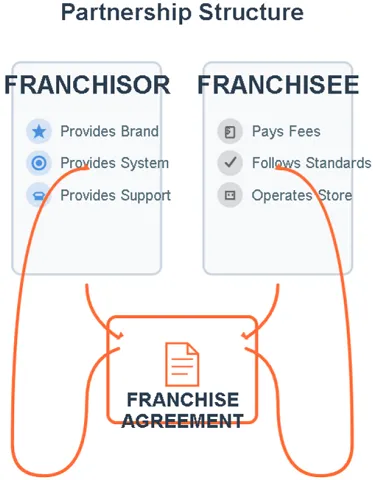
Imagine you want to build a beautiful house, but you're neither an architect nor know where to source reliable building materials. Then, a top-tier construction company (what we call the franchisor/headquarters) approaches you.
They say: "Hey, I have a perfect, market-proven blueprint for a house (this is the business model). It includes the design, construction process, and decor style (this is the operating system). Even the house's name, ‘Dream Home’ (this is the brand), is so famous that people are lining up to live there. I'll grant you the right to use this complete package and send engineers to guide you, helping you source all materials."
So, as a franchisee wanting to own this house, what do you need to do? You must pay a "blueprint usage fee" (this is the franchise fee) and commit to strictly adhering to their standards and processes during construction and ongoing maintenance. After the house is built, you will also pay a portion of your monthly rental income to them as compensation for brand usage and ongoing guidance (this is the royalty/commission).
The core of this transaction is trading a portion of autonomy and ongoing fees for a proven business system and brand influence.
All agreements between you will be documented in a thick, legally binding contract: the Franchise Agreement.
So you see, this isn't a simple buyer-seller relationship-it's a deep, long-term, mutually dependent partnership. The headquarters needs you to expand its territory, and you need the headquarters to mitigate risk. According to the U.S. Small Business Administration (SBA), this model typically boasts a higher success rate than independent startups because you're not groping in the dark alone-you're standing on the shoulders of giants. But remember, this does not guarantee 100% success; the "giant's" shoulders may also wobble.
Sounds great, right? But it only suits certain types of people. Now, let's ask the soul-searching question: Are you the right fit?
2: Is This You? The Mindset and Profile of a Successful Franchisee
In my experience, I've seen two typical failures. One is cash flow collapse-an unavoidable flaw. The other, more common and regrettable failure, is "personality mismatch."
I recall a friend from years ago-a wildly creative marketing genius who constantly came up with out-of-the-box ideas. He joined a well-known juice brand with great enthusiasm. But within the first month of opening, he couldn't take it anymore. Headquarters mandated using Cup Style A, but he insisted Style B looked better; they required posters on the left wall, yet he placed them on the right; He even developed a "secret menu" on his own, only to be caught by the regional manager during an inspection, resulting in a stern warning letter.
Within six months, he withdrew, losing a significant amount of money. He confided in me, disheartened: "I felt like I wasn't the boss at all-just a senior store manager dancing in shackles."
His story serves as my first lesson for all prospective franchisees: Franchise success stems first from respecting and executing the "system," and only second from your personal abilities.
A successful franchisee typically possesses these key traits:
A Follower, Not an Inventor: Do you love this brand's philosophy and system? Are you willing to replicate its successful model 100%? If you constantly think, "I have a better idea," independent entrepreneurship might suit you better. Franchising is about replication, not innovation.
An Exceptional People Manager: You're not buying a job; you're running a business. Your primary daily interactions aren't with products, but with your employees and customers. You must possess the ability to recruit, train, and motivate staff to consistently deliver standardized, high-quality service.
Community Leader: Your store is embedded in the community, making you the brand's local ambassador. You must actively participate in community events, build local networks, and integrate your store into the neighborhood fabric. Often, localized marketing and customer relationship management are tasks headquarters cannot handle for you.
Financially Disciplined: Can you strictly control costs? Do you understand financial statements? Can you consistently pay royalties and fees on time even during tough business periods? Emotional financial decisions are the enemy of entrepreneurship.
Reading this far, you might feel a bit uncertain. "I seem to have some of these traits, but others aren't so clear."
That's perfectly normal! No one is perfect. The key is to gain clear self-awareness. To help you, we've developed a simple tool.
Tool Link: Entrepreneur Assessment
Are you a natural leader or an exceptional executor? Do you focus more on macro strategy or micro implementation? Stop guessing. Take 3 minutes to complete our Entrepreneur Assessment Tool. Based on your answers, it will generate a personalized traits report to help you understand your compatibility with franchise models. This isn't a definitive test, but your first step in self-discovery.
Once you know yourself, let's dive into the specific types of models.
3: Types of Franchising Models
As you begin your research, you'll discover franchising isn't a one-size-fits-all concept. But don't worry-for most of us seeking business opportunities, focusing on one type is sufficient: the most prevalent and successful model today.
3-1: Business Format Franchise: The Most Common Path
Remember our earlier house-building analogy? A Business Format Franchise is like that construction company that not only gives you the blueprints for the house but also hands you a thick manual titled "House Construction and Operations Handbook."
This "manual" covers nearly every detail imaginable-and unimaginable:
Brand Identity: Everything is standardized, from logo colors and fonts to the style of staff uniforms.
Product/Service: Whether it's the burger recipe or the swimming lesson curriculum, strict adherence to standards is required.
Operational Processes: Detailed SOPs (Standard Operating Procedures) outline daily store openings, cleaning protocols, and customer complaint handling.
Marketing & Promotion: Headquarters handles national advertising campaigns while providing templates and guidance for local marketing initiatives.
Training Support: Continuous training is provided before and after opening to ensure you and your team stay on track.
Essentially, most consumer brands you know-like McDonald's, 7-Eleven, and Hilton Hotels-operate under this model. Why is it so popular? Because it minimizes the barriers and risks of entrepreneurship. You don't need to figure out the business model yourself; you just need to become an excellent "executor" and "manager." This is an extremely attractive option for those without business experience but who have some capital and a strong desire to own their own venture.
Of course, there are several other models in the world. We can briefly explore them to better understand the uniqueness of the business model franchise.
Product Distribution Franchise: This model functions more like an "authorized distributor." For example, Coca-Cola grants a regional bottling plant the right to produce and sell Coca-Cola products. The bottling plant can use the Coca-Cola trademark but enjoys greater operational autonomy, with weaker control from headquarters. Car dealerships are another classic example.
Manufacturing Franchise: Here, the headquarters supplies only core raw materials or proprietary formulas, allowing franchisees to locally produce and sell the final product. Examples include specialized industrial coatings or building materials brands.
For our website's target audience-investors and entrepreneurs seeking business opportunities-99% of the franchises you'll encounter and consider will fall under the business model franchise category. It offers a complete "turnkey" solution-exactly what we need to mitigate risks and boost success rates.
Now that you understand yourself and the most prevalent models, let's dive into the most exciting part: embarking on your journey to own your franchise.
4: The Journey to Owning a Franchise
This path is like a meticulously designed obstacle course, where every step demands wise decisions. Fear not-I'll walk with you every step of the way.
Step 1: Is Franchising Right for You?
This is the starting point of the entire journey-and the most crucial step. Before investing a single penny or minute, take a moment to reassess yourself.
Reevaluate your "why": Are you seeking financial freedom? Looking for a more flexible career? Or simply passionate about a particular brand? Different motivations will shape your subsequent choices and drive your perseverance.
Be honest about your finances: How much cash do you have available for investment? How much loss risk can you tolerate? Remember, you'll need not only the initial franchise fee and renovation costs, but also at least 6-12 months of working capital to cover rent, employee wages, and miscellaneous expenses during the initial "ramp-up period."
Secure family support: Starting a business is never a solo endeavor. Do your family members understand and support your decision? Are they prepared to face potential future pressures and uncertainties alongside you?
I've seen too many people abandon their ventures midway because they failed to thoroughly consider these three questions. The passion for entrepreneurship can easily be eroded by daily trivialities and pressures. Only that core "why" and the support of your family will carry you through the toughest times.
Tool Link: Entrepreneur Assessment
If you haven't already, I strongly recommend completing our Entrepreneur Assessment Tool now. It will help you objectively evaluate your strengths and weaknesses.
Step 2: Finding and Researching Opportunities
Once you've identified your direction, it's like unlocking a whole new world of possibilities. You'll discover franchise opportunities everywhere.
You can explore diverse industries-from traditional food service to rapidly growing service-based businesses like owning a swim school franchise, early childhood education, gyms, pet care, senior home services, and more.
How to research?
Start with what you love: What ignites your passion? Is it food, fitness, or education? Beginning with industries that interest you makes the research process more engaging.
Watch emerging trends: Consider societal shifts. For instance, service-oriented and educational franchises are rising as people prioritize health and experiential consumption.
Leverage specialized platforms: Websites like ours aggregate extensive brand information. Filter by industry, investment level, or location. To our brand directory here.
Initial Screening: List 5-10 brands that interest you. Visit their official websites, download their franchise manuals, and form a preliminary impression of each brand.
This stage is like a "casting call"-your goal is to cast a wide net and gradually narrow your focus.
Step 3: Understanding the Financial Commitment
Now, let's talk money. This is the most sensitive-and most practical-question.
The total investment to open a franchise far exceeds that tempting "franchise fee." It's a complex combination, typically including:
Initial Franchise Fee: The fee paid to headquarters for brand licensing and initial training. Ranges from thousands to hundreds of thousands of dollars.
Real Estate/Lease: One of the largest expenses. Whether purchasing or leasing a storefront, plus subsequent renovations, requires substantial capital.
Equipment & Inventory: Kitchen appliances, teaching materials, initial merchandise stock, etc.
Ongoing Fees:
Royalty Fee: Typically 4%-8% of your monthly gross revenue. This covers the ongoing use of the brand and systems.
Advertising Fee: Usually 1%-3% of your monthly gross revenue, supporting the headquarters' national marketing campaigns.
Working Capital: This "lifeline money" is crucial! I cannot stress enough the importance of setting aside sufficient funds.
Case Study: How much can franchise costs vary? Let's examine two real-life examples.
Many wonder: "How much does it cost to own a Chick-fil-A franchise?" The answer may surprise you: its initial franchise fee is just $10,000! This is remarkably low in the industry. However, this comes with an extremely rigorous screening process (reportedly with an acceptance rate below 1%). Furthermore, Chick-fil-A headquarters owns and controls the real estate for the stores. Franchisees function more like "operators" with a very high profit share rather than asset owners. This is a highly unique and non-replicable case.
Now, let's examine another example: owning a swim school franchise. Take the well-known Goldfish Swim School in the U.S. as an example. According to data disclosed on its official website, the total investment is estimated between $1.34 million and $3.25 million. This substantial investment primarily covers venue leasing/construction, pool construction, and complex equipment systems.
The table below provides a clearer picture of the difference between "surface costs" and "true costs":
| Cost Item | Fast Food Brand (Estimated) | Service Brand (Estimated) |
|---|---|---|
| Initial Franchise Fee | $30,000 | $50,000 |
| Renovation & Equipment | $150,000 - $350,000 | $200,000 - $500,000 |
| 3 Months Rent Deposit | $15,000 | $25,000 |
| Initial Inventory | $10,000 | $5,000 |
| Subtotal (Tangible Costs) | $205,000 - $405,000 | $280,000 - $580,000 |
| 6 Months Working Capital | $50,000 - $100,000 | $80,000 - $150,000 |
| Total Investment Estimate | $255,000 - $505,000 | $360,000 - $730,000 |
See that "working capital"? That's the "part below the iceberg" countless newcomers overlook.
Tool Link: ROI Calculator
Feeling overwhelmed by the numbers? Don't worry. That's exactly why we developed the ROI Calculator. Input the estimated investment, projected revenue, and royalty rate you've learned from the franchisor. The calculator will generate a visual chart showing how long it will take to break even and the potential profit margins over the next few years. Remember, this is just an estimate, but it gives you a basic sense of the business's financial health.
Step 4: The Application and Approval Process
Once you have a clear understanding of the financials and have selected a few target brands, it's time to formally "knock on the door." This process is like a two-way interview.
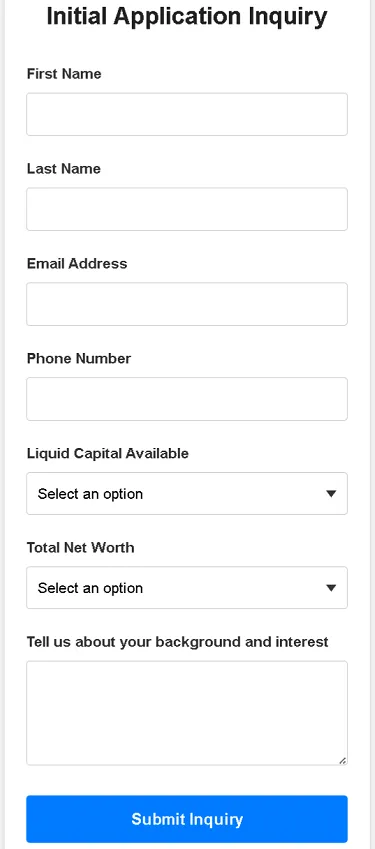
The standard process usually unfolds like this:
Submit Initial Application: Fill out a simple form on the brand's official website to express your interest.
Preliminary Discussion: The brand's franchise development manager will contact you for a phone call to understand your background, financial situation, and intentions.
Receive the FDD: If you pass the initial screening, the brand will legally provide you with a comprehensive Franchise Disclosure Document (FDD). We'll discuss later just how crucial this document is.
In-depth interviews: You may undergo one or more rounds of interviews, sometimes requiring travel to headquarters for a "Discovery Day" to meet the core team.
Background and Financial Review: The brand will conduct a rigorous review of your credit history and asset status.
Final Approval: Congratulations! If all goes well, you'll receive a formal approval letter and franchise agreement.
This process can take several weeks or even months. Top brands have particularly stringent screening procedures. Understanding the application process for "how to own a Chick-fil-A franchise" reveals how high the bar is set for candidates by top brands. They seek not just investors, but long-term partners whose values align closely with theirs.
Tool Link: Opportunity Comparison & Business Plan Generator
During interviews and decision-making, you may find yourself torn between two excellent brands. At this point, you can use our Opportunity Comparison Tool to lay out key information like franchise fees, royalties, and support systems side-by-side, enabling a more rational choice.
Simultaneously, preparing a professional business plan will impress the franchisor. You can start using our Business Plan Generator to organize the information you've gathered and your own thoughts.
Before signing any formal agreements, let's take a step back and calmly examine both sides of the coin.
5: The Pros and Cons of Owning a Franchise
Franchising isn't a magic bullet. It's a double-edged sword that can help you overcome obstacles or potentially harm you.
The Pros:
Proven Business Model: You don't have to "reinvent the wheel." From products to marketing, everything has been tested by the market, significantly reducing the risk of failure.
Strong Brand Recognition: Customers may walk in on your opening day simply because they recognize your brand. This built-in customer traffic is a dream for independent entrepreneurs.
Comprehensive Headquarters Support: Training, procurement, technical support, marketing strategies... You're not fighting alone-you have a vast support system behind you.
Easier Access to Funding: Banks and financial institutions are more willing to lend to franchise projects backed by well-known brands, as their risks are more manageable.
The Cons:
Lack of Autonomy: This was the root cause of my friend's failure. You must strictly adhere to headquarters' rules, even if you believe your own ideas are better. Your creativity will be severely restricted.
Ongoing Fees:Whether you profit or lose money this month, you must pay royalties and advertising fees on time. This becomes immense pressure during tough business periods.
Restrictive Contract:Franchise agreements are often lengthy and heavily favor headquarters' interests. Clauses like renewal terms, resale provisions, and termination conditions may hide hidden pitfalls.
Shared Reputation: If other franchisees face scandals or headquarters makes poor decisions, your business may suffer negative repercussions-even if you're performing well.
My personal experience reveals the greatest challenge lies in shifting mindset. I once conducted thorough research on a project and even prepared funding. But after speaking with several veteran franchisees, I realized deep down I was still that person always wanting to "try something new." I understood that if I joined, I'd spend every day torn between "following the rules" and "breaking them"-which would be incredibly painful. Ultimately, I passed on that opportunity, but the experience gave me a deeper understanding of franchising and self-awareness.
6: Deconstructing the Deal: A Deep Dive into the Franchise Disclosure Document (FDD)
If there's one thing in the entire franchising process that demands 120% of your attention, it's the FDD.
This document, mandated by the U.S. Federal Trade Commission (FTC), isn't a brand brochure-it's the franchise's "medical report," containing every pro and con you need to know. Typically hundreds of pages long, it covers 23 standard items.
Most people get overwhelmed just looking at it. But as an expert, I'll tell you: just like a detective, focus on these key "secret-holding" items:
6-1: Reading Between the Lines of Key FDD Items
Item 7: Estimated Initial Investment
What to watch out for: The figure listed is usually a range and often represents an "ideal scenario" estimate. It may not include sufficient working capital or underestimate local renovation costs.
What you should do: Multiply the minimum value in Item 7 by 1.5 to establish a more realistic startup capital target. Simultaneously, personally research commercial rent and renovation quotes in your specific location.
Item 19: Financial Performance Representations
What to watch out for: This is the most enticing-and most "dangerous"-section of the FDD. It presents revenue or profit data from existing franchise locations. But scrutinize whether these figures represent national averages or specific regional data-and whether they reflect all stores or only top-performing ones.
What if this section is blank? Many brands omit Item 19, not necessarily due to misrepresentation but to mitigate legal risks. In such cases, Item 20 becomes critical.
Item 20: Outlets and Franchisee Information
What to watch for: This section lists the number and contact details of franchise outlets opened, transferred, and closed over the past three years. If you notice an unusually high closure rate in a specific region, this is a major red flag!
What you should do: This is your "intelligence network"! Select at least 10-15 franchisees from the list-especially those recently opened and those operating for years-and call them. These are known as "Validation Calls."
Item 17: Renewal, Termination, and Transfer
What to watch for: You need answers to three questions here:
What rights do I have to renew after the contract expires? What conditions must be met?
Under what circumstances can headquarters unilaterally terminate my contract?
If I want to exit, can I transfer the store to someone else? What restrictions does headquarters impose?
What you should do: Imagine the worst-case scenario. If your relationship with headquarters breaks down, or if a family emergency forces you to exit, this clause will determine your fate.
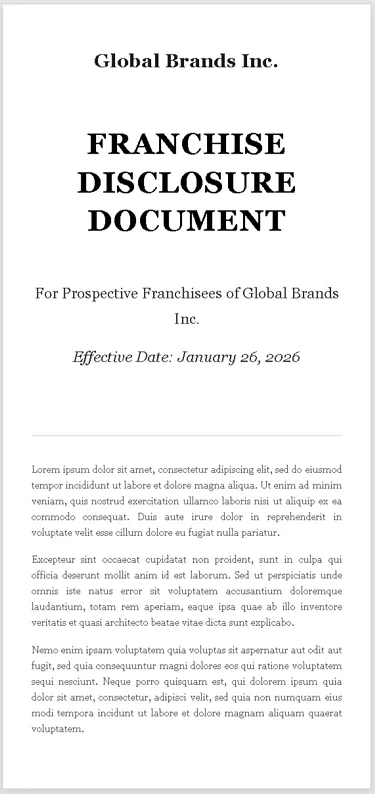
I strongly recommend-and reiterate-that before signing any documents, you must hire a professional franchise attorney to review the FDD and franchise agreement clause by clause with you. This investment of several thousand dollars in legal fees could save you hundreds of thousands or even millions in potential losses. This is one thing every successful franchisee I've encountered does.
6-2: 10 Critical Questions to Ask Your Franchise Attorney Checklist":
1. What is my complete exit strategy?
Question: "Please help me map out all possible paths and specific conditions for exiting this agreement-whether favorable or unfavorable.
If I wish to sell my business, what is the process? How much veto power does headquarters hold?
If I choose not to renew after the 10-year contract expires, what steps must I take? Are there restrictions prohibiting me from entering a similar industry (non-compete clause)?
If I pass away unexpectedly or become disabled, can my family inherit the business? Or would it be forced into liquidation?"
Why this matters: Every business decision should be "backward-designed." Before investing a single penny, you must clearly understand how you'll recoup your investment in the future-or how to exit under worst-case scenarios. This is the part of the entire agreement most critical to your long-term interests.
2. Am I required to sign a personal guarantee, and what does that truly mean?
Question: "Does this agreement require me (and my spouse) to sign a personal guarantee? If so, please explain in plain language what this legally entails. In the event of business failure and outstanding debt, what personal assets could headquarters or the landlord pursue?"
Why it matters: This is where countless franchisees fall into the deepest pitfalls. A personal guarantee means the company's debts are tied to your personal assets. If the business fails, you could lose not only your investment but also your home, car, and personal savings. You must fully grasp the gravity of this risk.
3. How "exclusive" is my exclusive territory?
Question: "Item 12 describes my operating territory. Please analyze whether headquarters retains the right to compete with me within this area through other channels, such as:
Selling products directly to customers in my territory via their official website or app?
Selling their products through special channels like supermarkets or airports?
Opening another store right across the street from my territory boundary?"
Why it matters: In the digital age, the definition of "territorial protection" has become highly ambiguous. A seemingly protected territory can become worthless due to the headquarters' online sales or other channel strategies.
4. Beyond Item 7, what are the most common "hidden" or unexpected costs you see with this franchisor or in this industry?
Question: "Based on your experience, what are the most common additional expenses franchisees encounter during operations for this brand or industry that aren't explicitly listed in the FDD? For example: mandatory technology upgrade fees, store renovation costs, or mandatory annual conference attendance fees."
Why it matters: The initial investment estimate in the FDD (Item 7) is often a conservative estimate. Experienced attorneys have seen numerous cases where unexpected bills arise during actual operations. This insight helps you create a more realistic financial budget.
5. How restrictive are the supplier requirements? Do I have any freedom to choose?
Ask: "Does the agreement mandate that I purchase everything from headquarters' designated core suppliers? If so, are these suppliers' prices subject to market fair value? If I find sources elsewhere offering equivalent quality at lower prices, am I permitted to use them?"
Why it matters: Being forced to purchase from high-priced designated suppliers is a major reason franchisees see their profits eroded. This directly impacts your future profitability and cost control capabilities.
6. Under what exact conditions can the franchisor terminate my agreement?
Question: "Please list all specific actions that could constitute a ‘breach’ leading to contract termination. Which breaches are minor and remediable? Which are severe and warrant immediate termination?"
Why it matters: You must clearly understand your "red lines." Some agreements contain extremely strict clauses-even a single late royalty payment could constitute grounds for termination. Grasping these terms is essential to protect yourself from unexpected "exit."
7. How do you interpret the data in Item 19 (Financial Performance Statement)? Or, what does its absence signal?
Question: "Regarding the financial data in Item 19, how reliable do you consider it? Are there any particular ‘traps’ to watch out for? If this brand chooses not to provide Item 19, based on your experience, what might be the underlying reason? Is this a red flag?"
Why it matters: Item 19 is the most enticing part of the FDD, yet also rife with potential misdirection. An attorney can help you decipher the true meaning behind these figures. Should Item 19 be absent, their expertise will help you determine whether this represents standard conservative business practice or a cause for concern.
8. Based on your experience, are any parts of this agreement realistically negotiable?
Question: "I understand most franchise agreements are standardized, but based on your experience handling similar cases, are there any clauses (e.g., flexibility regarding local marketing, specific conditions for resale) we could potentially discuss or refine with headquarters?"
Why it matters: This question helps set realistic expectations. Even if 99% of the content is non-negotiable, securing a favorable 1% through your lawyer could save you significant trouble or money down the road.
9. If I have a dispute with the franchisor in the future, what is the resolution process?
Question: "Review the dispute resolution clause. Are we required to use arbitration or can we pursue litigation? Is the venue in my location or must it be at the franchisor's distant headquarters? How does this impact my cost of enforcement?"
Why it matters: This is a classic legal "trap." If you must fly thousands of miles for arbitration or litigation, the exorbitant costs could force you to abandon your rights altogether when disputes arise.
10. Putting the legal language aside, what is your professional "gut feeling" about this agreement and franchisor?
Ask: "Among all the franchise agreements you've reviewed, how does this one rank in terms of fairness and risk? Compared to industry standards, is it favorable to franchisees, or overly biased toward headquarters? Are there any ‘red flag’ clauses that make you feel ‘uneasy’ or ‘unusual’?"
Why it matters: This is the ultimate, most valuable thing you're paying your lawyer for-his professional experience and intuition. A good lawyer doesn't just interpret the text; he tells you where this agreement stands within the broader industry landscape based on hundreds of agreements he's seen, giving you invaluable advice that goes beyond the legal text.
7: Beyond Day One: Common Challenges and How to Prepare
Signing, renovating, opening... The excitement peaks at the ribbon-cutting moment. But the real test has only just begun. Many articles end here, but I want to share some real stories about what happens after the "honeymoon period."
7-1: The People Problem
I once mentored a franchisee who opened a specialty coffee shop. His coffee was excellent, and the location was prime, yet business remained stagnant. After spending an afternoon at his store, I identified the problem: His staff consistently wore sour expressions, moved at a snail's pace, and possessed only superficial knowledge of the products.
I asked him, "Have you trained your employees?" He replied, "Headquarters provided training." I pressed further, "What about you? Do you communicate with them daily? Do you know why they're unhappy?" He fell silent.
This is a common pitfall for many new owners: assuming that paying fees means headquarters handles everything, including staff management. The reality is, headquarters provides a training framework, but implementing that framework, building team culture, and retaining top talent are entirely your responsibility. You must become a "Chief Motivator" who inspires your team to fight for your business.
7-2: The Marketing Puzzle
You pay advertising fees every month, and headquarters runs cool ads on TV and online. But why is your store still deserted?
You need to understand: Headquarters' ads address brand awareness, while your own local marketing drives foot traffic.
I once met a pizza franchisee who was incredibly successful. What was his secret? He sponsored the local high school basketball team, gave away free pizza slices at community weekend markets, and built relationships with administrative departments in nearby office buildings by offering group discounts for afternoon tea. These are things headquarters will never do for you, yet they tangibly drive business to your store. You need to be like a tree, sinking your roots deep into the soil of your community.
7-3: The Relationship Game
What's your dynamic with the Area Manager sent by headquarters? Is it "cop and robber," or "coach and player"?
That largely depends on you.
I know a franchisee who kept falling into traps, always feeling the Area Manager was there to "pick on him." When the manager suggested adjusting merchandise displays, he'd agree verbally but revert immediately after the manager left. When reminded about an expiring promotion, he'd dismiss it and procrastinate. The result? When he genuinely needed urgent support from headquarters-like during a POS system crash-his support emails were always prioritized last.
Smart franchisees, however, treat their regional managers as "free consultants." They proactively seek advice, share challenges, and even invite managers to analyze their financial statements. When you view them as partners, you'll discover resources and support from headquarters far exceeding expectations.
8: Your Unique Advantage: Building Your Business Plan
By now, you might feel overwhelmed by the volume of information. Don't panic. In truth, every step we've just covered-self-assessment, market research, financial analysis, risk anticipation-is laying the foundation for your ultimate success. And the thread that weaves all this thinking together is a professional business plan.
It's not an assignment for others; it's your personal "battle map." It helps you:
Clarify Your Thoughts: Transform scattered ideas into structured text and data.
Secure Funding: If you need a bank loan, a high-quality business plan is your essential stepping stone.
Guide operations: After launch, it serves as your action guide for measuring performance and adjusting strategies.
In the past, crafting a business plan took weeks or even required hiring a ghostwriter. But now, I want to offer you a smarter option.
Tool Link: Business Plan Generator
You've done all this groundwork-it's time to turn it into a polished, presentable outcome. Our Business Plan Generator is a wizard-style tool. Simply input the information you've already considered (your personal strengths, target brand analysis, financial projections, etc.), and it will automatically generate a fully structured, professionally formatted business plan. You can edit, save, and export it anytime. This will be your most reliable assistant throughout your entire decision-making process.
9: My Personal View & Final Advice
Alright, after covering all this objective knowledge and process, I want to share some of my most genuine thoughts from the heart.
In my view, the essence of franchising is an amplifier. It magnifies your strengths, but it also magnifies your weaknesses. If you're disciplined, a skilled manager, diligent, and pragmatic, franchising will give you wings, propelling you swiftly toward success. But if you're impulsive, rule-averse, and impatient, it will make every step arduous, ultimately trapping both you and your investment in a difficult situation.
Therefore, my first piece of advice is: look inward endlessly and honestly. Before researching any brand, spend ample time studying yourself. Our assessment tool is merely a starting point-you must have deep conversations with family and friends to understand how they see you.
My second piece of advice is: Fall in love with the "business" itself, not just the "product." I've seen many people impulsively join a franchise because they enjoy drinking a particular brand of bubble tea. But they soon discover that running a bubble tea shop means spending 90% of their time managing inventory, supervising staff, cleaning equipment, and dealing with delivery platforms-leaving little time to actually enjoy the drinks. You must genuinely be passionate about the business operations themselves: relish solving problems, optimizing processes, and seeing profits grow. Otherwise, you'll burn out quickly.
My third, and most crucial, piece of advice: Never believe the myth of "easy money." If a brand paints franchising as effortless as a beach vacation, turn tail and run immediately. Any worthwhile business opportunity demands significant investment of your time, energy, and dedication. Franchising merely provides a clearer map-but the journey still requires you to walk step by step. It helps you avoid some known pitfalls, but new, unforeseen challenges will always arise on the entrepreneurial journey.
I firmly believe that franchising as a business opportunity remains one of the best choices in this era for ordinary people who are ready to work hard, eager for success, yet lack experience. It offers an excellent model for balancing risk and reward.
10: Conclusion & Action Steps
Today we've journeyed together through a long process-from understanding the core logic of how franchising works to exploring the real-world challenges of owning a franchise. You should now realize that franchising isn't a simple "buy-and-sell" transaction; it's a complex business decision requiring deep engagement.
But your greatest gain should be clear insight and confidence to act. You are no longer a confused bystander; you now possess a complete decision-making framework and a practical toolkit.
Next, I recommend taking action through these steps:
Immediately use the Entrepreneur Assessment Tool: This is the starting point for all your actions.
Use the ROI Calculator for preliminary financial simulation: Gain a rough understanding of your capital situation and expected returns.
Browse our brand library: Link to your brand list page to begin your "preliminary screening" process.
Input your thoughts and data into the Business Plan Generator: Dynamically build your roadmap.
Share your questions in the comments section: Which industry are you researching? Have questions about a specific brand? Or experiences to share? Tell me in the comments below-I promise to respond within 48 hours. Let's build this community into a family brimming with wisdom and support.
11: Further Reading
12: About the Author
I am Qaolase, the founder and lead writer of this site. I'm not some financial titan with countless credentials-I'm just like you, an ordinary entrepreneur driven by curiosity and passion for the business world. Over the past decade, I've immersed myself in the realm of business opportunities and franchising, analyzing hundreds of brands and helping friends like David and countless online readers avoid investment pitfalls to find their own paths. My motivation for creating this site is simple: to share the most valuable business insights in the most authentic and accessible language, helping you navigate fewer detours on your entrepreneurial journey.
Here, I share not just data and theory, but the insights, lessons, and reflections distilled from years of conversations with hundreds of entrepreneurs and the study of hundreds of business cases. I hope that through my efforts, you can navigate your entrepreneurial journey with fewer detours and greater confidence.
My mission is clear: to empower every aspiring entrepreneur with authentic content and practical tools.
Feel free to reach out anytime via email or comments.
13: References:
U.S. Small Business Administration (SBA): While specific success rates fluctuate with economic cycles, the SBA generally considers franchises lower-risk due to their established systems. For more information, refer to the SBA's official franchise resources page.
Chick-fil-A Official Website, Franchise Page.
Federal Trade Commission (FTC), Consumer Advice on Franchising.
Please be respectful and constructive in your comments. Spam and inappropriate content will be removed.