
Have you ever found yourself dreaming late at night about becoming your own boss? Saying goodbye to the nine-to-five grind, building your own business from the ground up-that feeling of controlling your own destiny is truly exhilarating. But then reality hits like a bucket of cold water: What business should I start? What if I have no experience? The risk of failure seems too high...
I understand this interplay of dreams and fears all too well. That's when "franchising" emerges like a ray of light. It appears to be the perfect solution: a business model already proven successful in the market, a complete operations manual, plus a well-known brand. All you had to do, it seemed, was "copy and paste" success.
But is that really the case?
In my view, franchising is more like embarking on a challenging hike with a detailed map in hand. The map is invaluable, but you still have to traverse the mountains and valleys yourself, weathering unexpected storms along the way.
This article serves as your map and travel guide. I'll use straightforward language, combined with my friend's real-life experiences, to help you fully understand franchising. After reading, you'll be able to clearly answer these questions:
What exactly is franchising, and is it truly right for me?
Beyond the franchise fee, how much capital do I really need to prepare?
How should I interpret that legal document (FDD) that seems like hieroglyphics?
How do I find the "right" opportunity among thousands of brands?
How can I scientifically predict whether I'll make money and how long it will take to recoup my investment?
Let's cut through the fog together and see the true face of franchising.
Investment and Legal Disclaimer:
The information provided herein is for educational purposes only and does not constitute legal, financial, or investment advice. Purchasing a franchise is a significant investment with inherent risks. Before signing any agreements or making any payments, we strongly recommend conducting thorough due diligence and consulting independent franchise attorneys and financial advisors. Your business success depends on your own skills, efforts, and market conditions.
1. Is Franchising Right for You? The Crucial First Question
Before delving into costs, legalities, and various details, we must first answer a fundamental question: Are you, in personality and mindset, the right fit to be a franchisee?
This may sound a bit abstract, but trust me-it's the key to determining whether your future will be one of entrepreneurial joy or agony.
I often categorize entrepreneurs into two types: "Innovators" and "Implementers."
Innovators crave creating things from scratch. They relish breaking rules, trying novel approaches, and embracing the chaos and uncertainty of creation. Forcing them to strictly follow a thick operations manual is pure torture.
Implementers excel at maximizing results within established frameworks. They value proven systems and follow best practices to ensure efficiency and outcomes. Their goal is to refine a successful model from 90% to 95%, or even 99%.
The very essence of franchising is a stage tailor-made for "executors." The franchisor has invested significant time and money, enduring countless trials and errors, to distill that "success formula" (the operations manual). What they need are partners who can replicate this model 100%, not "innovators" who want to tweak recipes or redesign store layouts.
I recall a few years ago, my friend Mark-a highly creative chef-nearly joined a renowned sandwich chain. His plan was: "I'll leverage their brand and foot traffic, then secretly tweak the menu with my own improvements and introduce signature items." Thankfully, at the last moment, I persuaded him to speak with several existing franchisees. That's when he realized his plan was explicitly prohibited in the contract-any menu changes could trigger hefty fines or even disqualification. The conversation gave him a cold sweat and made him see he was, at heart, an "Innovator" who truly wanted to open his own, one-of-a-kind restaurant.
So, which type are you?
Here's a simple checklist:
When you get a new phone, do you carefully read the manual first, or dive right in?
At work, do you prefer following established processes, or are you always looking for new ways to do things?
Do you agree with the saying, "If it ain't broke, don't fix it"?
There's no right or wrong-only what fits. If you find yourself leaning toward following a proven system and relish the process of perfecting things within established rules, congratulations-you possess the most crucial mindset trait for becoming an outstanding franchisee.
Action Guide
This isn't just a feeling. Before investing your time and money, discover your entrepreneurial DNA. We've designed a free assessment tool specifically for this purpose. Take two minutes to complete it and gain clearer insight into yourself. "Take Our Free Entrepreneur Assessment".
2. Understanding the Franchise Landscape: Fees and Formats
Alright, let's assume you've passed your self-assessment and believe you're the chosen one-the "doer." Next, we dive into the real world of hard cash. Here, two core concepts you must grasp are franchise ‘Formats' and "Fees."
2-1. The Two Main Types of Franchises
While franchises come in countless varieties, their business models essentially fall into two main categories. Understanding their differences helps you better align your interests and investment direction.
The first, and most common: Business Format Franchise
This is the model that typically comes to mind when we mention "franchising." Think of McDonald's, Subway, 7-Eleven, or any familiar chain hotel.
Under this model, the franchisor doesn't just grant you the right to use its trademark-it provides a complete, packaged business system. It's like buying a computer pre-loaded with an operating system, essential software, and 24/7 technical support. All you need to do is turn it on and start using it.
This "complete package" typically includes:
Brand usage rights: You gain access to a brand with established recognition and customer trust.
Complete operational system: A comprehensive Operations Manual guides you through everything from product preparation and customer service to employee management and even store cleaning protocols.
Ongoing training and support: Headquarters provides initial training for you and your staff, along with ongoing assistance in marketing, supply chain management, technology, and more.
Unified Supply Chain: You typically source raw materials and equipment from designated suppliers to ensure consistent quality.
The advantages of this model are clear: For newcomers without industry experience, it significantly lowers the entry barrier and reduces the risk of failure. You don't need to figure things out on your own; you need to follow the established system. But the drawbacks are also evident, as illustrated by my friend Mark's story: Your autonomy is severely limited.
Second: Product Distribution Franchise
This model focuses more on "distribution rights." The headquarters (Franchisor) grants you (Franchisee) the right to sell its products within a specific territory. You function more like a brand distributor.
Consider car dealerships in your city (like Ford or Toyota) or Coca-Cola bottlers and distributors. They use the headquarters' trademarks and sell products supplied by headquarters, but their day-to-day operations offer far more freedom compared to business model franchises. Headquarters likely won't dictate every detail, like the music in your store or employee uniforms.
This model typically requires higher initial investment (like car inventory) and often demands franchisees have prior sales and channel management experience.
For most investors and entrepreneurs seeking business opportunities, our focus usually centers on the first type: the Business Format Franchise. It offers a more comprehensive startup solution.
2-2. Deconstructing the Costs: More Than Just the Franchise Fee
This is where people most commonly get caught off guard-and where I must repeatedly caution you. When a brand advertises "$30,000 franchise fee only!", stay vigilant. This is absolutely, positively not the total cost of opening your store.
The franchise fee is merely the "entry ticket" paid to headquarters for brand licensing and initial training. The real bulk of expenses lies ahead.
Let's break down the Total Initial Investment you'll likely need to pay using a clear table. This represents the full capital you must prepare before opening your doors.
| Cost Item | Estimated Range | Notes |
|---|---|---|
| Initial Franchise Fee | $20,000 – $50,000+ | The "entry fee" paid to headquarters. |
| Real Estate / Rent | Highly variable | Rent, security deposits, or property-purchase costs; one of the largest variables. |
| Leasehold Improvements | $50,000 – $250,000+ | Storefront renovation & remodeling per headquarters standards; typically costly. |
| Equipment & Fixtures | $30,000 – $150,000+ | Kitchen appliances, POS systems, tables/chairs, shelving, etc. |
| Signage | $5,000 – $20,000+ | Interior & exterior branding signage. |
| Initial Inventory | $10,000 – $50,000+ | First batch of raw materials / merchandise needed before opening. |
| Grand-Opening Marketing | $5,000 – $25,000+ | Advertising & event spend for opening promotions. |
| Insurance & Licenses | $2,000 – $10,000 | Business insurance, operating licenses, health permits, etc. |
| Professional Fees | $3,000 – $15,000 | Fees for your lawyer & accountant (extremely important!). |
| Working Capital | $20,000 – $100,000+ | "Lifeline funds" to cover wages, rent, utilities, etc. during the first 3–6 months while the store ramps up. |
| TOTAL ESTIMATED INVESTMENT | $150,000 – $750,000+ | This is the real number you need to focus on! |
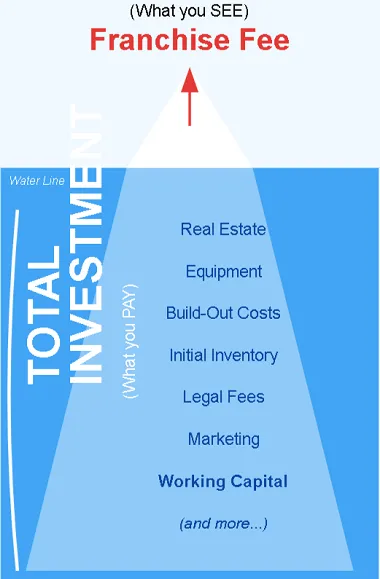
Seeing this total, are you a bit surprised? My friend Mark was exactly like that. He only saw the $40,000 franchise fee and thought his savings would cover it. When I helped him break down these hidden costs and realized the total investment could approach $300,000, he finally understood how naive his financial estimate had been. Had he signed the contract rashly, the result would have been a broken cash flow and project failure.
Don't forget the Ongoing Fees: After opening, you'll continue paying fees to headquarters-this is their primary profit source.
Royalty Fee: Typically 4%–8% of your monthly Gross Sales. You pay this regardless of profitability, as long as you have revenue.
Marketing/Advertising Fee: Usually 1%–4% of your monthly gross sales, used for the headquarters' national or regional brand advertising.
Action Guide
Don't be intimidated by these figures. A clear understanding is the first step to success. To help you visualize these investments and potential future returns, we've developed an ROI Calculator. Input the figures provided by the brand into the calculator to simulate different revenue scenarios and see how long your investment might take to break even. Use Our ROI Calculator Now!
3. The Legal Heart of Franchising: The Franchise Disclosure Document (FDD)
If franchising is a marriage, then the FDD is the comprehensive prenuptial agreement. In the United States, under Federal Trade Commission (FTC) regulations, any legitimate franchise brand must provide you with this document at least 14 days before you sign any contract or pay any fees.
This document is typically hundreds of pages long, filled with legal jargon, and looks incredibly intimidating. Most people skip straight to the signature page. Don't make this mistake! It's one of the most critical errors you can commit. The FDD is your sole window into the brand's secrets and your ultimate weapon against fraud.
You don't need to be a lawyer, but you must learn to read it like a detective. The FDD consists of 23 standard items. You don't need to read every word, but there are several critical items where you must give 120% effort to review.
3-1. How to Read an FDD: A 23-Item Breakdown for Beginners
Let's highlight the essentials. When opening the FDD, immediately turn to these sections:
Item 1: The Franchisor and any Parents, Predecessors, and Affiliates (About Headquarters)
What to look for: How long has the headquarters been in operation? Has it frequently changed parent companies? A stable, long-established headquarters is typically more reliable.
Item 3: Litigation (Litigation History)
What to look for: Has the headquarters been involved in numerous lawsuits with franchisees in the past? If you see frequent instances of the headquarters suing or being sued by franchisees over contract disputes, breaches, etc., this is a major red flag! It indicates potentially strained relations between headquarters and franchisees.
Item 4: Bankruptcy (Bankruptcy History)
What to look for: Has the headquarters or its executives filed for bankruptcy in the past? If so, proceed with extreme caution. Would you entrust your livelihood to a "captain" with a history of bankruptcy?
Item 5 & 6: Initial Fees and Other Fees
What to look for: This section details all the fees discussed in the previous chapter. Use this data to populate your budget spreadsheet. Pay special attention to "potential" fees and factor them into your worst-case scenario.
Item 7: Estimated Initial Investment
What to look for: This is the headquarters' total investment estimate. Your task is to take this table and verify each item against your local market. Are the headquarters' rental estimates realistic for your city? What about renovation costs? Don't blindly trust national averages provided by headquarters.
Item 19: Financial Performance Representations
This is the most controversial and valuable section of the FDD! It presents sales or profit data from existing franchise locations.
What to look for: First, has headquarters provided Item 19? While not legally required, a brand confident in its system typically does. If absent, ask why. Second, if provided, how is the data presented? Is it an average across all stores, or broken down by region and store type? More granular data offers greater reference value. But remember: past performance does not guarantee future results. This data should only serve as a reference for your ROI calculations-never as a promise.
Item 20: Outlets and Franchisee Information
This is the treasure trove of the FDD! It lists contact information for all existing franchisees, along with a list of outlets opened, transferred, or closed within the past year.
What to look for: Is the store closure rate high? If a system experiences significant annual closures, this is definitely not a good sign. More importantly, randomly select at least 10-15 franchisees from this list and call them!
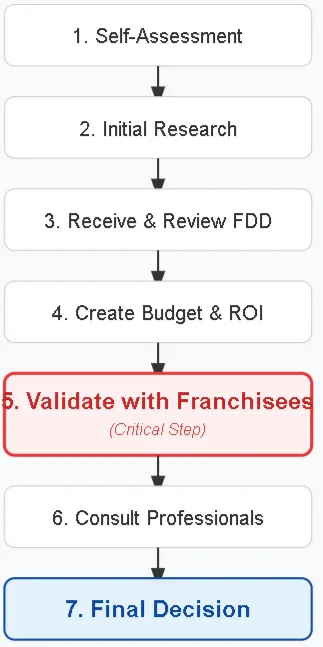
3-2. The Most Important Step: Talk to Current and Former Franchisees
If you can only remember one thing from this entire article, I hope it's this: Go talk to real franchisees.
The data in the FDD is cold and impersonal. Only franchisees' stories carry warmth and authenticity. They are living through everything you're about to face. They are your "preview of the future."
My friend Mark pulled back from the brink after speaking with franchisees of a sandwich brand. He learned not only that the menu couldn't be altered, but also heard things the FDD would never mention, like: "Headquarters' marketing support sounds great, but it's practically useless in our region." "The supply chain system sometimes fails, leaving us out of stock." "That new POS system is incredibly difficult to use, and headquarters doesn't care."
This honest feedback is worth its weight in gold.
When you call, don't just ask, "Are you making money?" No one will give you real numbers. Ask smarter questions instead:
"On a scale of 1 to 10, how would you rate headquarters' support? Why?"
"Was your actual total investment higher or lower than the FDD estimate? Roughly how much higher?"
"How many hours do you actually work per day? Does this match your pre-signing expectations?"
"What was the biggest challenge after opening? How did headquarters help you overcome it?"
"If you could go back in time, would you still choose to franchise with this brand?"
The ultimate question (ask those who have left the system): "Why did you decide to leave?"
For a more comprehensive checklist, you can read this article: A Consultant's Guide to Franchise Business Reviews: Evaluating Key Characteristics for Success .
You absolutely, absolutely, absolutely must speak with at least one former franchisee who has left or closed their store. Their perspective will show you the other side of the story.
4. From Research to Reality: Making Your Decision
When you've completed all the research above and are holding a pile of data, notes, and feelings, it's time for the most exciting yet challenging moment: making your final decision.
4-1. Comparing Your Top Choices
It's likely you're interested in more than one brand. Perhaps you're torn between a coffee brand and a children's education franchise. At this stage, you need a systematic approach to compare them, rather than relying solely on "I feel this one is better."
You need to translate your intuitive feelings into rational data comparisons.
Financial Comparison: Which brand's total investment better fits your budget? Which offers more favorable royalty fees and average profitability (based on Item 19 and your verification)?
Support System Comparison: Which brand has a more robust training system? Stronger marketing support? Based on franchisee feedback, which headquarters has a better reputation?
Lifestyle Comparison: Running a fast-food restaurant versus a gym means entirely different daily routines. One might require waking at 4 a.m., while the other involves closing at 10 p.m. Which aligns better with your desired lifestyle?
Action Guide
To help you compare more clearly, we've developed the Opportunity Comparison Tool. Input core data (investment amount, fees, training duration, franchisee satisfaction scores, etc.) for 2-3 brands you're researching. The tool generates an intuitive comparison report to help you make a smarter choice. Link here: Compare My Business Opportunities.
4-2. Securing Funding and Creating Your Blueprint
Once you've identified your target brand, the next step is typically securing funding. Unless you can pay in full, you'll need to apply for a loan from a bank or the SBA (Small Business Administration).
And before approving any loan, all lenders want to see one thing: a Business Plan.
A business plan isn't just for the bank-it's your roadmap for action. It forces you to consider details you might otherwise overlook:
Who are your target customers?
What's the competitive landscape in your area?
How will you market locally?
What are your financial projections for the next three years?
A restaurant business plan format will emphasize menu cost control and customer traffic analysis, while a service-based business plan focuses more on customer acquisition costs and staffing. Although franchise headquarters provide extensive information, you must localize it and make it your own plan.
Action Guide
I know writing a business plan sounds intimidating. But don't worry-you don't have to start from scratch. Our Business Plan Generator acts like a mentor, guiding you step-by-step through every section, from the executive summary to financial projections, helping you build a professional and comprehensive framework. Generate My Business Plan for Free.
4-3. The Final Step: Business Formation and Legal Review
Before signing the final franchise agreement, two crucial legal steps remain.
First, establish your business entity. You cannot sign as an individual. You must form a Limited Liability Company (LLC) or Corporation to act as the contracting party. Why? This creates a "firewall" separating your personal assets (home, car, savings) from your business debts and risks. If your business fails, creditors cannot seize your personal property. This requires preparing a set of business formation documents.
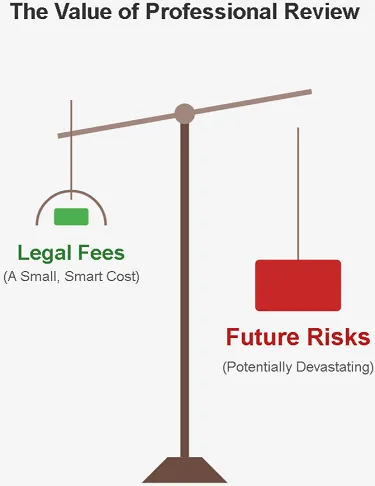
Second, hire a professional franchise lawyer/attorney to review all contracts. This is one of the most critical pieces of advice I can offer. You might think: "The contracts are standardized; headquarters won't modify them for me. Why spend the money?"
Wrong!
Your lawyer can explain the obscure clauses in the contract in language you understand, ensuring you fully grasp your rights and obligations.
They can spot potentially disadvantageous "trap" clauses.
While most core terms are non-negotiable, your lawyer may secure favorable conditions in ancillary agreements or lease contracts.
Crucially, they represent your interests, not the franchisor's.
Spending thousands on legal fees could save you hundreds of thousands in future losses. Search online for "business formation lawyer near me" to find local professionals.
5. Managing Your New Venture: A Look at the Books
Congratulations! After completing all these steps, you've finally received the keys and become a business owner. But the real challenges are just beginning.
Now, you need to think like a true CEO-and a CEO's primary concern is financial data. You must understand the basic bookkeeping format for small businesses.
The good news is that most established franchise systems provide a standardized accounting system or POS system that automatically generates most of the reports you need, such as the small business balance sheet format and income statement.
You need to develop the habit of reviewing these reports regularly, whether weekly or monthly.
Do your actual income and expenses align with your business plan projections?
What is your profit margin?
Is your cash flow healthy?
These numbers are your dashboard, telling you whether your business vehicle is cruising smoothly or heading for a flat tire. Spotting problems early allows timely adjustments.
6. My Personal Viewpoint: Beyond the Numbers
By now, I've broken down the technical aspects of franchising for you. But as we wrap up, I want to share some more intuitive insights-aspects I personally believe are equally, if not more, crucial.
Over the past decade, I've analyzed hundreds of business opportunities and spoken with countless entrepreneurs. One pattern stands out: Ultimately, success or failure rarely hinges on the business model itself, but rather on "people" and "expectation management."
First, let me reiterate my core point: Franchising is not passive investing. It's buying yourself an extremely demanding full-time job. Many are misled by the word "system," imagining they can sit back and collect checks. This is the most dangerous fantasy I've ever heard. In the first year-or even the first three years-you'll likely work harder than you ever have before. You'll be the first one in and the last one out. You'll handle clogged toilets, calm crying employees, and deal with difficult customers. Only when you commit fully and execute this system flawlessly yourself will it reward you. If you're not mentally prepared for this, I urge you to reconsider.
Second, don't chase after so-called "cheapest franchises to start." "Cheap" is often the biggest trap. A low-fee brand likely means weak support systems, low brand value, and inadequate training. The franchise fee you save will cost you tenfold in future operations. Conversely, a premium brand with higher fees uses its high barrier to entry as a moat. Its powerful brand influence, mature operational support, and vast customer base are your strongest safeguards for investment security. In franchising, the adage "you get what you pay for" rings truer than ever.
Ultimately, I believe cultural fit matters more than financial returns. You're joining a "family"-you'll interact with this headquarters team for the next 5, 10, or even more years. Do you align with their values? Do you appreciate how their support team communicates? When calling existing franchisees, ask more questions about the "people." "Do you feel like a respected partner or just a number?" "When you face challenges, does headquarters instinctively help you or blame you?" If you sense a cultural disconnect with a brand, no matter how profitable it is, every day will feel like a struggle.
So my final advice is this: Treat franchising as a serious, long-term commitment. Conduct thorough background checks, manage your expectations, and trust your gut when talking to real people.
7. Conclusion: Your Journey as a Franchise Owner Begins
We've journeyed together through a long path-from a vague entrepreneurial dream, to understanding the essence of franchising, to dissecting every detail of costs, legalities, and decision-making.
Let's quickly revisit your action roadmap:
Self-Assessment: Confirm whether you're the type who thrives on "execution."
Understand Costs: Recognize that total investment extends far beyond the franchise fee, and prepare a robust budget.
Conduct Due Diligence: Scrutinize the FDD like a detective and engage with existing franchisees.
Make Decisions: Use systematic tools to compare opportunities and craft your business blueprint.
Seek Professional Help: Make attorneys and accountants part of your team.
I hope what you feel now is no longer the initial confusion and fear, but the clarity and confidence that comes with mastering the knowledge.
The unique value of our website lies in the fact that we don't just give you information-we give you a complete "toolkit." This article is your "theoretical knowledge," while our Entrepreneur Assessment, ROI Calculator, Opportunity Comparison Tool, and Business Plan Generator are the "weapons" you'll use to put that theory into practice.
Final Call to Action
Now, you're ready. Knowledge and tools are at your fingertips. It's time to begin your exploration journey. Click here to Browse Our Franchise Listings.
8. Further Reading & Author Bio
8-1. Further Reading:
8-2. Let's Interact! You're not alone on your entrepreneurial journey.
Have you encountered any particular challenges while researching franchises?
Do you have any "pitfalls" or success stories you'd like to share?
Are there specific brands or industries you'd like me to explore in depth?
Leave your thoughts and questions in the comments below-I promise to respond personally within 48 hours. Let's connect and grow together!
9. About the Author
I am Qaolase, the founder and lead writer of this site. I'm not some financial titan with countless credentials-I'm just like you, an ordinary entrepreneur driven by curiosity and passion for the business world. Over the past decade, I've immersed myself in the realm of business opportunities and franchising, analyzing hundreds of brands and helping friends like David and countless online readers avoid investment pitfalls to find their own paths. My motivation for creating this site is simple: to share the most valuable business insights in the most authentic and accessible language, helping you navigate fewer detours on your entrepreneurial journey.
Citations:
Federal Trade Commission. "A Consumer's Guide to Buying a Franchise."
Please be respectful and constructive in your comments. Spam and inappropriate content will be removed.